Article: The Magic Mushroom That Is Lion's Mane
The Magic Mushroom That Is Lion's Mane
Lion’s Mane has become known as the mushroom for the mind. But the most interesting thing about it may be that its potential does not begin and end with the brain.
This extraordinary white mushroom contains a complex collection of naturally occurring compounds now being studied in relation to nerve growth, oxidative stress, inflammation and cellular resilience. It is one of the reasons Lion’s Mane has moved from centuries of traditional use into modern laboratories, clinical studies and the centre of the longevity conversation.
The science is still developing. Lion’s Mane is not a miracle cure, and many of the bold claims surrounding it move faster than the human evidence. Yet what researchers have uncovered so far is genuinely compelling.
Here is what we know, what scientists are still investigating, and why Lion’s Mane belongs in Marathon, Not A Sprint, our doctor formulated liquid supplement for cellular health and everyday longevity support.
WHAT IS LION’S MANE?
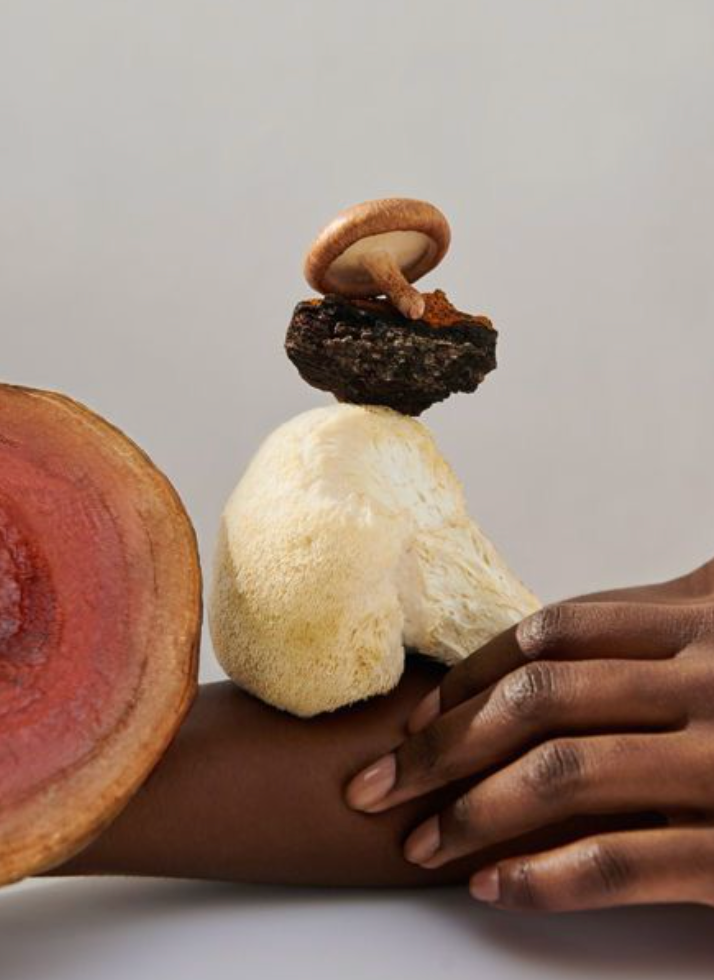
Lion’s Mane, scientifically known as Hericium erinaceus, is an edible mushroom recognised by its long, white, cascading spines. Its appearance explains the name. Its chemistry explains the attention.
Unlike a conventional vitamin with one clearly defined role, Lion’s Mane contains numerous bioactive compounds. These include polysaccharides, phenolic compounds, hericenones and erinacines. Different parts and preparations of the mushroom can contain different profiles of these compounds, which is one reason research results cannot always be compared directly.
Researchers are particularly interested in hericenones and erinacines because laboratory and animal studies suggest they may interact with pathways connected to nerve growth factor.
WHY IS LION’S MANE ASSOCIATED WITH BRAIN HEALTH?
The brain is made of cells that must communicate, adapt and maintain complex connections over a lifetime. That makes the health of nerve cells fundamental to memory, learning, concentration and cognitive function.
One molecule receiving particular scientific attention is nerve growth factor, often shortened to NGF. This protein is involved in the growth, maintenance and survival of certain nerve cells.
Laboratory research has found that compounds isolated from Lion’s Mane can stimulate NGF related activity and encourage neurite growth, the process through which developing nerve cells extend projections that help them communicate.
This does not mean taking Lion’s Mane has been proven to regenerate the human brain. It means that researchers have identified a biologically interesting mechanism that deserves further study.
That distinction matters.
Small human studies have produced promising but mixed results. A 2009 placebo controlled trial involving adults with mild cognitive impairment reported improved cognitive scores during Lion’s Mane intake, although the effect declined after supplementation ended. A 2023 pilot study in healthy young adults suggested possible improvements in speed of performance and subjective stress. A separate 2025 trial found no significant overall improvement in global cognition or mood after one acute dose, although one individual motor task improved.
Taken together, the research suggests potential rather than certainty. We have early signals, plausible mechanisms and a clear need for larger, longer and more standardised human trials.
THE MORE INTERESTING STORY MAY BE CELLULAR
The brain health conversation around Lion’s Mane is compelling, but it is only one part of the picture.
Every cell in the body is continuously responding to its environment. Normal energy production, pollution, ultraviolet exposure, stress and other everyday processes can generate reactive molecules known as free radicals. When the balance between these molecules and the body’s antioxidant defences is disrupted, oxidative stress can occur.
Oxidative stress can affect proteins, lipids and DNA, which is why it has become an important area of research in cellular ageing and long term health.
Lion’s Mane contains polysaccharides, phenolic compounds and other bioactives that have demonstrated antioxidant activity in laboratory research. Studies using cells and animal models have explored whether these compounds may influence oxidative stress, inflammatory signalling, mitochondrial function and cell survival.
This research is particularly interesting because brain health is cellular health. Neurons are cells. They rely on energy, communication and protection from damage just like every other cell in the body, although their structure and demands are uniquely complex.
The connection between cognitive health and cellular resilience is precisely why we think about Lion’s Mane more broadly. It is not simply an ingredient for moments when you want to focus. It is a mushroom being studied across several of the biological systems that help cells function and adapt over time.
Again, the strongest evidence for these wider effects currently comes from laboratory and animal research. It should not be presented as proof that Lion’s Mane prevents disease or slows human ageing. What it does offer is a fascinating, increasingly researched contribution to the larger science of cellular health.
CAN LION’S MANE PROTECT CELLS FROM OXIDATIVE STRESS?
The accurate answer is that Lion’s Mane has shown antioxidant activity in experimental research, but its effects in the human body are not yet fully established.
Antioxidant is often used as a vague wellness term. Scientifically, it describes a substance or system that can help neutralise reactive molecules or support the body’s own defence against oxidative damage.
Researchers have identified antioxidant compounds within Lion’s Mane and observed protective effects in several experimental models. These findings are part of the reason the mushroom is being investigated in relation to the brain, gut, immune system and wider cellular function.
However, laboratory antioxidant activity does not automatically translate into a specific result when consumed by a person. Absorption, dose, preparation, metabolism and duration all matter. This is why responsible formulation must look beyond a fashionable ingredient in isolation and consider the complete formula.
WHY WE PUT LION’S MANE IN MARATHON, NOT A SPRINT
We created Marathon, Not A Sprint around a simple principle: longevity is not about chasing one miracle molecule. It is about supporting the fundamental processes that keep the body functioning, day after day.
Lion’s Mane earned its place because it brings a different dimension to the formula. It connects the conversation around cognitive health with the wider science of oxidative stress and cellular resilience.
Each ingredient was selected as part of a considered blend rather than for its name alone. Nicotinamide riboside sits within the NAD+ pathway, an area of significant interest in cellular energy research. Vitamin C contributes to the protection of cells from oxidative stress and to normal collagen formation for the normal function of skin. Niacin contributes to normal energy yielding metabolism and the normal functioning of the nervous system.
Lion’s Mane complements this foundation through its distinctive and still emerging body of research. Together, the ingredients reflect the full picture we wanted the formula to address: cellular energy, antioxidant protection, the nervous system and the daily practices that support health over time.
Marathon, Not A Sprint is delivered as a liquid ritual with a sour cherry and hibiscus flavour, designed to make consistent supplementation feel less clinical and far more pleasurable.
Because the most effective wellness ritual is the one you actually want to return to.
REFERENCES
1. Contato AG et al. Lion’s Mane Mushroom, Hericium erinaceus. Nutrients. 2025.